
First govt facility in Karnataka to provide oxygen therapy for diabetic wounds
HBOT is a therapy where patients breathe pure oxygen in a pressurised chamber, boosting oxygen delivery to damaged tissues.
Salar News
-
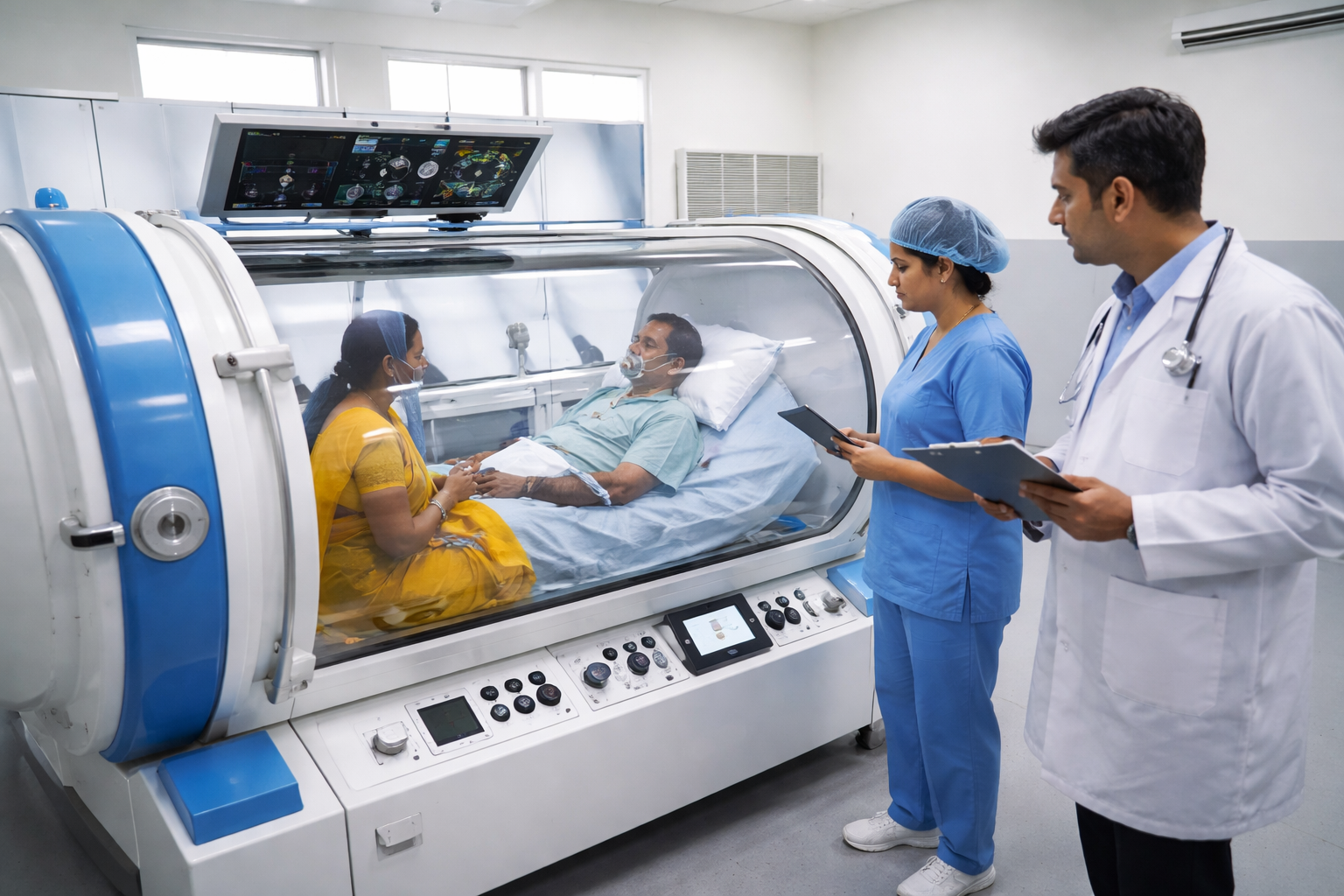
HBOT is designed to reduce infections, speed up wound healing and lower the risk of amputations (AI)
Bengaluru,
23 March
The
Karnataka Institute of Endocrinology and Research (KIER) in Bengaluru has
introduced Hyperbaric Oxygen Therapy (HBOT) to treat diabetic foot
complications, particularly chronic, non-healing wounds, marking a first for a
government facility in the State.
HBOT is a
specialised treatment in which patients breathe pure oxygen in a pressurised
chamber, allowing the blood to carry higher levels of oxygen to damaged
tissues. This accelerates healing, fights infection and promotes the growth of
new blood vessels—critical for patients with poor circulation.
The
institute, which exclusively treats diabetic patients, handles around 120
diabetic foot cases daily and houses one of the earliest dedicated podiatry
departments. It has set up two HBOT units, procured at a cost of approximately
₹1 crore through CSR funding.
Each
session lasts about 70 minutes, during which patients breathe oxygen at nearly
twice the normal atmospheric pressure. To ease anxiety, one attendant is
permitted inside during treatment.
HBOT is
designed to reduce infections, speed up wound healing and lower the risk of
amputations. KIER plans to offer the therapy at less than half the cost charged
by private hospitals, where sessions typically begin at Rs 3,000.
India accounts for one in seven adults living with diabetes globally, with diabetic foot ulcers affecting up to 34 per cent of patients. In Karnataka, prevalence ranges between 12–16 per cent, with up to 13,500 new cases annually, contributing to nearly 80 per cent of non-traumatic lower limb amputations.
Share Now

Leave a Reply
Your email address will not be published. Required fields are marked *
Other Stories



.png)


.jpeg)
.jpg)
.png)